European Markets

European Markets

European Markets

There are many European markets in Europe and across the rest of the world that offer a great day out and a great opportunity to pick up a range of items. The great thing about shopping in European markets is that it’s a chance to get away from the commercialised world of shopping in arcades and megastores and to try buying something that has been made locally by people who put real time and effort into their creations. This will mean that in buying from European markets you are encouraging small business and entrepreneurship and that your money will make a much bigger difference to that person than it would to a large chain like Tescos or Toys R Us. The items will be far cheaper as a result too as there will be fewer overheads and no staff wages to pay, and they will be more unique as they have been hand-crafted ensuring that there are no other copies of those items in the world. It can also be a great way to sample some of a European culture or cuisine and they are normally brimming with life and atmosphere.

Across the world some of the most popular European markets are German Christmas markets. Germany is very big on Christmas and as such their markets are a great place to find a great Christmas atmosphere and to try some great foods and drinks. Normally you will be able to find a German style pub selling black forest beer and gluwein, the latter of which is highly warming and comforting in the colder months. You should also look for a store selling ‘lebkuchen’ which are ginger flavoured chocolates that are highly delicious. Or schnitzel and other German meals. In these German Christmas markets just as other European markets you will also find a range of crafts and other home-made items being sold for a reasonable price and that makes it a great place to pick up cheap Christmas presents.

If you head to European markets in some of the hotter European countries such as Turkey then you can enjoy the experience of haggling and bartering for items. This way you can again get your items a lot more cheaply than you could otherwise and get some very beautiful Turkish designs. Rugs are particularly abundant in these European markets and you can get some spectacular hand-woven rugs for a very reasonable price.

However for those who are not used to haggling in European markets or the forcefulness of some of the sales technique the experience can be quite intimidating meaning you leave without anything nice or end up paying full price. To enjoy these markets you need to avoid feeling ‘obligated’ into buying something and recognise that the store owners often genuinely want to chat and provide you with tea. At the same time always be prepared to walk away – you can come back later – and they will often then lower the price quite drastically in a bid to keep you in the store. As a rule in Turkish European markets you should look to pay around 1/3rd of the initial asking price.

Posted under Europe

This post was written by admin on February 6, 2011

Tags:

European markets

European markets

European markets

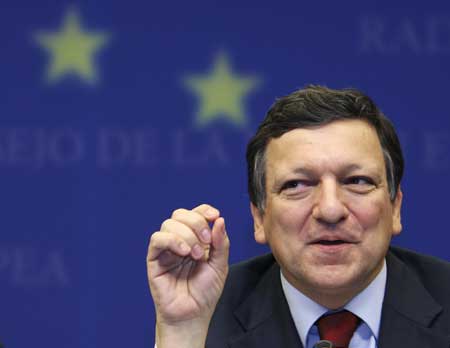
The European Union has brought prosperity to the European market. The E.U made special arrangements and treaties between countries that they could never go against each other. There was peace everywhere which resulted in prosperity in European markets. For example France, Italy, Belgium, Luxemburg and Germany signed a treaty in the year 1951 to club all their coal and steel markets.  In the year 1957, a very important treaty called the Treaty of Rome was signed to form The European Economic Community, commonly known as the ECC. This laid a foundation for a common market for all the European Union countries.  The ECC made many reforms in the European markets. It eliminated all the tariffs or duties on the imported goods.  This single market soon became a realism practice after the European Union Single European act in 1986. The European commission and The Council of Ministers are responsible for the major decisions taken for the European markets. These bodies update the policies on a regular basis and regulate all the market strategy. The common market also produced thousands of jobs for the natives of Europe.  It also formulated a citizen’s agenda to promote economic integration.

This single European market also provides certain freedom to the member states.  The chief liberty involves the freedom of goods. The European Union states that a nation’s main responsibility is take care of its citizens and their needs. Therefore, the proposal for removing the national barrier for the free movement of goods between E.U countries was detached. This lead to the freedom of goods: only in exceptional cases, like the vehicles, chemicals, cosmetics, footwear, textile, toys, gas appliances, pharmaceutical products and all the construction material. The European Union only regulates the higher risk product sectors.  All the lower risk segments are managed by the local bodies.  The main function of The European Union is to harmonize the trade process in European markets.  The European Commission monitors the movement of goods in both harmonized and non harmonized markets.

Other than providing a single market for goods, The E.U provides single market for services as well. This allows one member nation to provide services to another member nation, where it is not even customary.  These services include financial services, broadcasting, telecommunication and other services.  The single market depends on services, goods, capital and people. And the European Union Commission makes sure that there is a healthy business environment so that The European markets can compete at their best with the global markets.

Posted under Europe

This post was written by admin on April 6, 2009

Tags: , ,