Europeword slogan

Rough Euro Exchange Rates

Rough Euro Exchange Rates

Rough Euro Exchange Rates

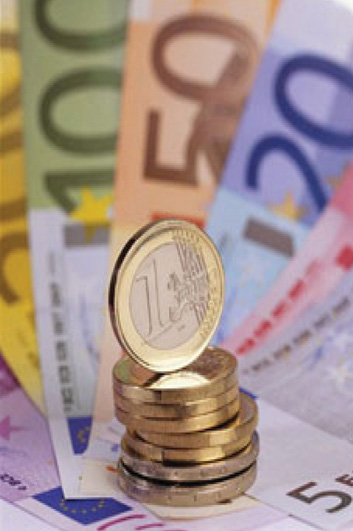
Recently many European countries made the switch to the Euro meaning that they used a single currency. Thirteen countries did this in total, those thirteen comprising of:

For tourists travelling into Europe this made life much simpler. Knowing the Euro exchange rates would mean that you could understand the value of your currency quickly and easily in any of these countries. At the same time it would mean that you wouldn’t have to carry lots of different currencies on you when travelling between European countries but instead could just have the one currency and use it across all these different territories.

Still though it is important to know the Euro exchange rates so that you can have the correct money for the country you are visiting and so you know roughly what you are spending in your own cash when abroad (it’s otherwise easy to spend too much as it doesn’t feel like ‘real’ money unless you convert it in your head). If you are travelling between countries that use the Euro and those that do not meanwhile then you might want to change your money as you travel and in this case knowing the Euro exchange rates can help you to figure how much you are going to get for your Zloty or pounds. At the same time it can be interesting to know the Euro exchange rates across all the countries as it paints a picture of the success of the Euro and where it stands compared to other currencies.

However any guide to Euro exchange rates is going to be changeable as the values of currencies are changing constantly – sometimes drastically. At the same time values like ’1.29382′ are not going to be of any use when trying to calculate how much something is ‘really worth’ in a European market unless you’re rain man (and even if you remembered these values for each country they would change by the time you came to use them). Here then we will look at the rough exchange rates as they stand so that you can quickly refer to them when needs be or get a basic picture of the currency’s value.

(Please keep in mind that these rates are changing every minute and these example should only be used to get a basic idea of the exchange rate)

1 Euro equals…

1.30 American Dollars

5.35 Argentine Peso

1.31 Australian Dollars

2.20 Brazillian Reals

0.80 British Pounds

1.30 Canadian Dollars

645 Chilean Pesos

8.60 Chinese Yuan

2,411 Colombian Peso

7.40 Croation Kuna

7.44 Danish Krone

10 Hong Kong Dollars

277 Hungarian Forint

154 Icelandic Krona

59 Indian Rupee

4.60 Israeli New Shekei

108 Japanese Yen

2.50 Libyan Dinar

3.99 Malaysian Ringgit

15.80 Mexican Pesos

1.70 New Zealand Dollars

7.70 Norwegian Kroner

.50 Omani Rial

111.15 Pakistan Rupees

4.72 Qatar Rial

4.25 Romanian Leu

40 Russian Ruble

4.87 Saudi Riyal

1.68 Signapore Dollars

9 South African Rand

1462 South Korean Won

144 Sri Lanka Rupees

8.87 Swedish Krona

1.25 Swiss Francs

37.87 Taiwan Dollars

40 Thai Baht

8.30 Trinidad/Tobago Dollars

5.60 Venezuelan Bolivar

Posted under Europe

This post was written by admin on February 2, 2011

Tags: , , , ,

European markets

European markets

European markets

The European Union has brought prosperity to the European market. The E.U made special arrangements and treaties between countries that they could never go against each other. There was peace everywhere which resulted in prosperity in European markets. For example France, Italy, Belgium, Luxemburg and Germany signed a treaty in the year 1951 to club all their coal and steel markets.  In the year 1957, a very important treaty called the Treaty of Rome was signed to form The European Economic Community, commonly known as the ECC. This laid a foundation for a common market for all the European Union countries.  The ECC made many reforms in the European markets. It eliminated all the tariffs or duties on the imported goods.  This single market soon became a realism practice after the European Union Single European act in 1986. The European commission and The Council of Ministers are responsible for the major decisions taken for the European markets. These bodies update the policies on a regular basis and regulate all the market strategy. The common market also produced thousands of jobs for the natives of Europe.  It also formulated a citizen’s agenda to promote economic integration.

This single European market also provides certain freedom to the member states.  The chief liberty involves the freedom of goods. The European Union states that a nation’s main responsibility is take care of its citizens and their needs. Therefore, the proposal for removing the national barrier for the free movement of goods between E.U countries was detached. This lead to the freedom of goods: only in exceptional cases, like the vehicles, chemicals, cosmetics, footwear, textile, toys, gas appliances, pharmaceutical products and all the construction material. The European Union only regulates the higher risk product sectors.  All the lower risk segments are managed by the local bodies.  The main function of The European Union is to harmonize the trade process in European markets.  The European Commission monitors the movement of goods in both harmonized and non harmonized markets.

Other than providing a single market for goods, The E.U provides single market for services as well. This allows one member nation to provide services to another member nation, where it is not even customary.  These services include financial services, broadcasting, telecommunication and other services.  The single market depends on services, goods, capital and people. And the European Union Commission makes sure that there is a healthy business environment so that The European markets can compete at their best with the global markets.

Posted under Europe

This post was written by admin on April 6, 2009

Tags: , ,

Euro results for European economy

Euro money

Euro money

The Euro was established and came into practice with the sole aim of giving the Dollar a tough time as the universal currency. But, as speculated, it hasn’t helped the European economy much; rather, according to surreys and news reports, growth rate of many European nations was just a meager 1.4% in the last fiscal year. In fact, many countries in the European Union are facing recession under inflationary pressures as well as pressures of rising food and oil prices worldwide.

Spain, Germany and Britain are well on their course to recession, which happens when the growth falls for two consecutive years, this might happen to other large economies of the European Union as well, considering the catastrophic effect that mortgage and sub-prime crisis has had on the developed economies of the European Union.

Speaking of Germany, both the customers and the sellers have kept a tight control over their purses- a situation known as “purse string tightening”.  On the bigger prospective, Germany still has a robust economy, good employment rate and strong exports, even with a small growth rate of 1.8%. Netherlands and Poland, though much smaller than Germany and Britain in terms of economy, have been able to stand the test of these financial blows rather well and are growing at rates far better than the average Euro zone averages.

Inflation has much to do with the rising financial crisis, which is attributed to rising oil and food prices. Jaun Claude Trichet, President of the European Central Bank further warns that inflation is not going to cool down in the near future. He remarks that inflation may come down slightly in 2009, allowing the economy to stabilize a bit, but the markets and investors, and therefore the whole economy will be watchful and volatile for a longer than expected period.

The only option seen by most economists under the present prospective is to cut the interest rates to give the economy a boost, but Mr. Trichet dismissed this proposal because this would lead to a further aggravation of inflation according to him, and the Union Bank’s main aim is to control and stabilize prices rather than push the growth as of right now.

Posted under Europe

This post was written by admin on September 14, 2008

Tags: , , , , , ,