Europe

Europe

Europe

Europe is a large continent (one of the seven in the world) which borders the Arctic Ocean, Atlantic Ocean, Mediterranean Sea, and Asia among others and which contains countries such as France, Germany, England, Turkey, Greece, Poland, the Czech Republic, Bulgaria and many others. It is also the second smallest continent in the world (roughly 10,180,000 square kilometres which makes up about 2% of the surface of the world). Despite it’s small size however, Europe has the third highest population of any continent with 11% of the world’s population behind Asia and Africa. The largest country in Europe is Russia, though this spans both Europe and Asia, while the Vatican City situated in Rome is its smallest.

Europe has had a tumultuous and highly interesting history. Ancient Greece can arguably be described as the birthplace of Western culture with many very important thinkers and artists at the time residing there. Ancient Rome also played an important part in Europe’s early development as the Roman empire introduced roads and sewers to much of Western Europe and beyond.

Europe would play a larger role in global affairs following the 16th Century during ‘colonialism’ when many European nations such as England, France and Spain would control much of the world including America, much of Africa, a large part of Asia and Oceania. Europe also played a very large role in both world wars; the first a result of Kaiser Wilhelm the Second and tensions with England, the second a result of Adolf Hitler’s trying to recapture much of the land they lost during the Treaty of Versailles (and more), with their invasion into Poland being the catalyst for war. Following this Europe would be divided into two parts by an ‘Iron Curtain’ during the cold war – NATO in the West and the Warsaw Pact in the East.

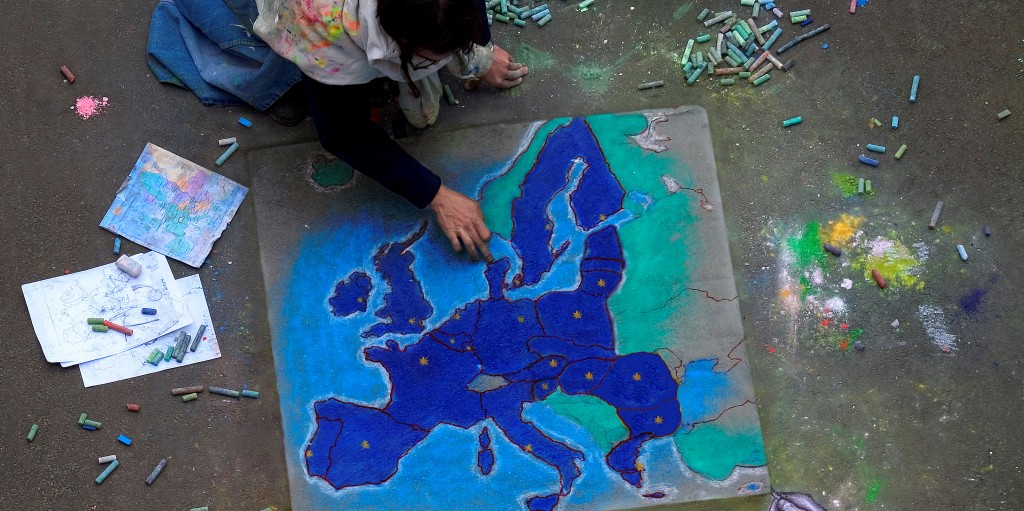
More recently European integration has resulted in much of Europe finding strength in numbers. The EU is a union of currently 27 states of Europe, committed to integration and providing a standardised system of laws aimed at creating a single market to encourage the flow of goods, people, services and capital. This has resulted in the abandonment of passport controls between the borders, as well as a common currency adopted by 16 of the 27 members called ‘The Euro’.

While this integration makes Europe a convenient place to visit – allowing easy transportation between countries etc, its colourful history means that it remains a highly diverse place to visit with many cultures, traditions and climates. Visiting the Czech Republic could not be more different from visiting Spain or Southern France, and visiting the cheque republic provides an entirely different experience to visiting Bulgaria or Switzerland. As such there is a lot of tourism in Europe, and it continues to play an important role on the world stage.

Posted under Europe

This post was written by admin on December 20, 2010

Tags: , ,

Europa

Europa

Europa

Although the concept of Europa has gained immense popularity and coverage in the past decade or so, there are some aspects which are rather baffling for first time visitors to the Europa states. Issues related to working across borders, traveling from one of the member countries of Europa to another and the kind of formalities involved are still unclear, not only among tourists but also among the legal residents of Europa countries.

For citizens of the union, moving about within the Europa countries is free and in essence, should be hassle free. There is minimal red tape interference for the movement of residents of the community between countries belonging to the Europa. It actually becomes irrelevant whether one needs to move about between Europa member countries for professional reasons, or for personal reasons, as long as one possesses all the documents that certify him as a resident of any one of the member states.

For those who are not the legal citizens of any of the member countries of Europa, getting a Schengen Visa can greatly reduce the paperwork involved while traveling between members of the Europa. With a Schengen Visa, you will not be required to get a new Visa made each time you travel in or out of a state that is a member to the Schengen Treaty (and most Europa states have indeed signed this treaty)- which means that you can just sit back and enjoy your cross-continental holiday without having to worry about the paperwork. Schengen treaty also lays down common rules for checking and immigration procedures at all the frontier states and once checked in, a traveler need not check in at every Europa destination that falls under the Schengen pact. Common visa policies and common internal currency (Euro) are some of the additional features associated with making a Europa trip using a Schengen Visa.

While entering or leaving the Europa nations, you might have to take care of some other issues as well. Legally ending all the contractual and legal relationships is the most important thing you should take care of before leaving a specific country belonging to the union. Besides, Informing the tax administration of the host country about your departure and closing all the temporary bank accounts that you might have opened during your stay in any of the Europa nations are also important steps in order to prevent unnecessary obligations later in the future.

Posted under Europe

This post was written by admin on February 25, 2009

Tags: