The Vatican City – The Smallest Country in Europe

The Vatican City – The Smallest Country In Europe

The Vatican City – The Smallest Country In Europe

It might surprise you to learn that the smallest country in Europe is no bigger than 110 acres (0.2 square miles) with a population of just over 800 people. This is The Vatican City, a landlocked sovereign state which is located in Rome. This is the official smallest country in Europe, and is so small in fact that many of us would not think it was a country at all to look at.

The Vatican City – the smallest country in Europe – was established by the ‘Lateran Treaty’ in 1929 and is where the Pope resides. Despite being the smallest country in Europe, The Vatican City is nevertheless a popular tourist attraction and has many things to see and do. Of course many people will travel to see the Pope and it is a common pilgrimage as the centre of Catholicism. Meanwhile though, many others will travel to The Vatican City in order to admire St Peter’s Square and Basilica. The square also contains an Obelisk taken from Heliopolis, Egypt, as well as a fountain.

Exploring the Basilica is a highly interesting experience and there is a lot of fantastic architecture on display, while the interior is filled with statues and other items. It is possible also to travel to the top of the Basilica’s dome by heading up hundreds of stairs, which will afford you a fantastic view over all of the smallest country in Europe as well as wider Rome.

The Smallest Country In Europe

The Smallest Country In Europe

Another great thing to see when visiting The Vatican City, the smallest country in Europe, is the Vatican museum. This is a huge museum that has a vast range of religious paintings, statues and sculptures. It’s here that you can see the Sistine Chapel with Michaelangelo’s greatest works including the creation of Adam. A great way to make the most of your trip is to visit the museum in the evening (you can book online) which creates a more scenic and romantic experience.

For the next smallest country in Europe, you’ll need to visit Monaco – which is just 0.75 square miles across. This is closely followed by San Marion (24 square miles), Liechtenstein (62 square miles), Malta (122 square miles) and then Andorra (180 square miles).

Posted under Europe, Travel

This post was written by admin on May 28, 2011

Tags: ,

Eastern European Countries

Eastern European Countries

Eastern European Countries

Eastern European countries are those that reside in the Eastern portion of Europe. This term is used largely colloquially and  is not simply defined being highly context dependent (whether somewhere is ‘Eastern’ depends very much on your location. The United Nations Statistics Division described Eastern European countries as ‘Belarus, Bulgaria, Czech Republic, Poland, Russia, Slovakia, Ukraine, Romania, Hungary and Moldova’. Colloquially, many people would consider Eastern Europe to be all those countries East of Germany – Poland onwards. Of course many of the other differences in Western and Eastern European lifestyles and cultures can be seen as being a result of the differences in climate and geography that impact many other areas of Eastern European life.

Some definitions of Eastern European countries describe the concept of Easter Europe as being a cultural phenomenon rather than solely a regional or geographical one as the name would suggest. This is a controversial subject, but here the characteristics of Eastern European countries are considered the differences in religion, economy, culture and politics when compared to those in the West. Other definitions are related to the cold war and describe Eastern European countries as those in the Eastern Bloc and all those that came under Soviet influence at the end of WW2.

Those visiting countries largely considered to be Eastern European in nature then can expect a wholly different experience from Western Europe. Whereas Western European countries are similar to Northern America in terms of culture and politics, Eastern European and Central European cultures are more likely to have differences in the cost of living, their traditions, their climate and their religions and might be more similar to India or other countries in that region. Visiting Eastern European countries then can provide a more affordable holiday as well as a more interesting one politically and culturally for Westerners.

The earliest reference to Western and Eastern European divisions was during the Roman Republic. As the Roman empire expanded across Europe, there appeared to be a division between the reek speaking Eastern provinces and the Latin speaking Western provinces. This division was then further cemented during the late middle ages and the late antiquity. The Middle Ages began after the collapse of the Western Roman Empire, while the Eastern Roman Empire, known also a the Byzantine Empire, survived for a subsequent thousand years. During this time there was further a division in Christianity across East and West Europe in 1054 resulting in two different branches of Christianity – the Roman Catholic Church in the West and the Eastern Orthodox Church in Eastern European religion. The Mongols would then invade many Eastern European countries resulting in yet more differences.

Posted under Europe

This post was written by admin on November 11, 2010

Tags: ,

The European Union countries- at the helm of global affairs

European Union countries

European Union countries

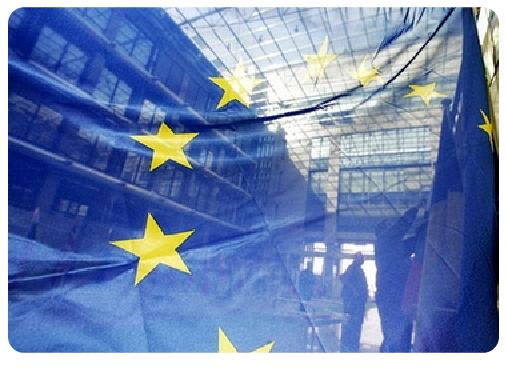
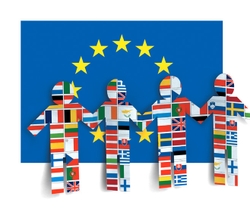
The European Union, popularly known as the E.U, is the political and economic juncture of 27 nations. Alphabetically the list includes Austria, Belgium, Bulgaria, Cyprus, Czech Republic, Denmark, Estonia, Finland, France, Germany, Greece, Hungary, Ireland, Italy, Latvia, Lithuania, Luxemburg, Malta, Netherlands, Poland, Portugal, Romania, Slovakia, Slovenia, Spain, Sweden and the United Kingdom. Romania and Bulgaria are the most recent European Union additions.

The pioneer to the E.U was based after the Second World War. This was a modest effort to unite European counties. The first nations to unite together were France, Italy, Luxemburg, Belgium, Germany, and Luxemburg. These countries are known as the founding members of the European Union. Gradually more and more European nations joined the European Union.

The European Union came into effect after the Treaty of Maassticht. The European Union aims at strengthening the democratic governing of the partaking nations. This shall improve their good organization and working. The European Union was intended to set up economic and financial alliance. This step was made to secure these countries and represent them as a union in front of the world. These countries have to follow some basic laws. The European Union countries should have democratic rule and human right protection. All the European Union counties are supposed to follow certain objectives on the subject of monitory issues.

The body that represents the people of European Union is called the European Parliament. The European Commission manages people’s interests like finance etc. The chief decision making body is the Council of the European Union. It has all the legislative powers.  All these bodies are based on democracy and equal rights.  The Commission elects a Commissioner of each member state to control the state affairs. There are other sub bodies like banks, courts and committees to help the smooth functioning of the European Union. The court of justice is the fundamental legislative body of the European Union. The court of Auditors monitors the European Union financial plan and expenditure.

The European Union is chiefly looking for growth and harmony between its member states. For this purpose the European Union arranges for several meetings, agendas and treaties from time to time.  The European Union has establishes a common market in Europe. The European Union imposed a common currency called the “Euro” in all its member nations. This has made its special place in world’s market. Europe emerged as a powerful region in front of the world.

Posted under Europe

This post was written by admin on April 15, 2009

Tags: , , ,

Europe Cultural Capitals

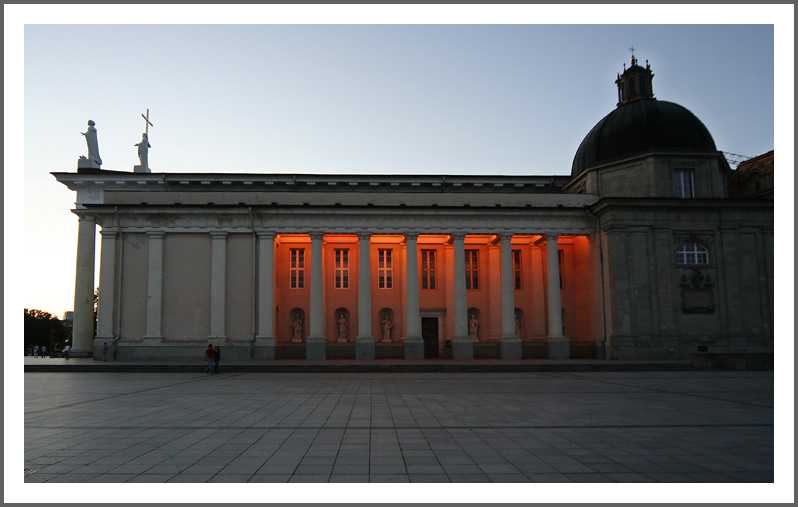
Europe Cultural Capitals Vilnius capital

Europe Cultural Capitals

The latest annual Europe cultural capitals include Linz and Vilnius. Linz is the third largest city in Austria. Vilnius happens to be the largest city as well as the capital city of Lithuania. The two cities are separated by a fine border of Czech Republic and Poland. Travelers will be glad to know that both the cities are quite near to each other. One can actually experience both the Europe cultural capitals in one trip. In the year 2008, Liverpool, situated in England and Stavanger, situated in Norway, were made the Europe cultural capitals.

Vilnius city got its name from the Vilnia River. The old city of Vilnius is surrounded by huge walls. These walls were built around six hundred years ago. The city has a total of nine city gates. The Vilnius City truly deserves to become the Europe Cultural Capital as it demonstrates variety of cultures in many ways. For instance, languages from various cultures are spoken in this city. These languages include Latin, Russian, Turkic, Old Slavonic, Lithuanian, Polish, German and Yiddish. All these clusters have made remarkable influence on the city’s architecture, trade and culture. This Europe cultural capital is definitely the blend of variety and originality. You will see the European touch in every aspect of life in the city of Vilnius. The city now, demonstrates the contemporary Europe. But the ancient architecture is perfectly intact and kept alive for tourist attraction from all over the world. The city has made special arrangements for tourists for the present year. The European cultural capital has planned to organize the International Alternative Cultural Festival in May, 2009. Be it sports or literature, the Europe cultural capital has it all ready for you. You just can not miss the city’s pomp and show this year.

Linz is situated on the banks of River Danube, West of Vienna, Austria. The city has beautiful scenery. It surely justifies becoming the Europe cultural capital for the reason that the city has the entire cultural heritage intact. This city was founded by the Romans which is a proof enough for the splendid architecture and culture of the city. It was first known as Letina by the Romans. The city has plenty to offer this cultural year. It is organizing the Annual Crossing Europe Film Festival too. Linz is known for drama, music, art and craft.  It has the beautiful Lentos art Museum. The city also offers the arts Electronica Festival and the Linz Fest.

Posted under Europe

This post was written by admin on March 30, 2009

Tags: , ,

EuropeWord News

EuropeWord

EuropeWord

Countries that have been completed :
Autria Belgium Czech Respublic Denmark Finland France   Germany   Greece   Hungary   Ireland   Italy   Lithuania   Norway   Poland   Portugal   Romania   Russia   Spain   Sweden   Turkey   Ukraine   United Kingdom

Advertising opportunities are available.

Europe Word website is still in production so if there is
anything else that you would like to see on this website, please let us know

www.EuropeWord.com

Posted under EuropeWord

This post was written by admin on September 8, 2008

Tags: , ,