The Biggest Gay Parade in Europe

The Biggest Gay Parade in Europe

The Biggest Gay Parade in Europe

For gay travel, Europe has a lot to offer and there are many exciting gay scenes and hot spots to visit. However while there are many clubbing areas and other gay tourist spots, nothing beats a gay parade which is a jubilant celebration that anyone can enjoy. But for the discerning gay tourist, where is the best gay parade to visit? Here we will look at the biggest gay parade in Europe, and some of the other close contenders.

The biggest gay parade in Europe is something that is not clear cut – partially as parades will vary in size year on year. However in Europe the best location for gay parades is Berlin – a true hot spot for gay travel and home to some of the largest and most vibrant gay parades in the world.

Sao Paulo in Brazil was home to arguably the largest gay parade in the world according to estimates and had over three million attendees. One of the largest parades in Europe however could have been the ‘Love Parade’ which took place in Berlin, Germany for some years. While it is theoretically an annual event, certain circumstances lead to some years being canceled. Not purely a gay parade, the love parade is however intended to spread love, tolerance and music. Sadly in 2009 the love parade was struck by tragedy when a stampede killed 21 people in attendance; and as a result the parade was called to a halt.

However the best way to find the biggest gay parade in Europe today is to wait for Gay Pride. Gay Pride parades take place in cities across Europe and each hosts huge celebrations. However, as one of the true capitals of the world for gay travel, the Gay Pride parade held in Berlin is perhaps the most impressive and is possible the biggest gay parade in Europe. The Gay Pride celebrations in Berlin include the Berlin Lesbian and Gay City Festival held in Shconeeberg and features musical performances, art, lectures, exhibits and more. On the final weekend of Gay Pride, the Berlin Gay Pride Parade then takes place in the same location starting at 12.30pm on the corner of Kururstendham and is followed by the Pride Rally.

As well as potentially Europe’s biggest gay parade, Berlin is also home to ‘Folsom Europe’ which is Europe’s largest fetish festival and is held in September. Both events are great fun and colorful celebrations that must be visited by gay travelers, but also anyone else looking for a unique and exciting experience.

The Biggest Gay Parade in The World

The Biggest Gay Parade in The World

Posted under Europe, Travel

This post was written by admin on November 15, 2011

Tags:

The EU

The EU

The EU

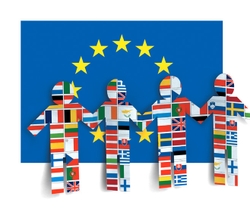
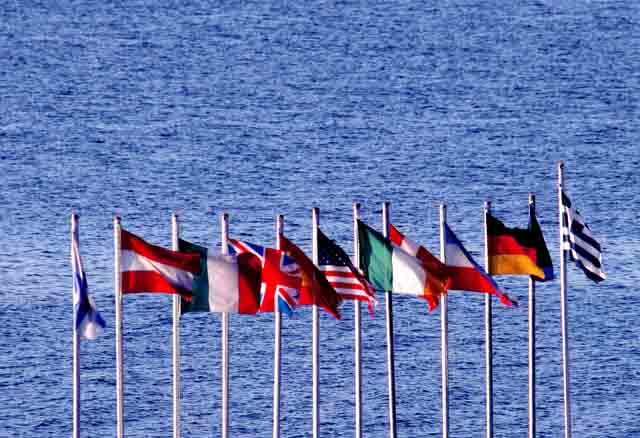
The EU stands for the ‘European Union’, the union of 27 states (mostly of course in Europe) which centre around the goal of regional integration in order to create a single market conducive to easy trade and the free movement of people, services, goods and capital.

The following states are currently members of the EU:

Austria,

Belgium,

Bulgaria,

Cyprus,

The Czech Republic,

Denmnark,

Estonia,

Finland,

France,

Germany,

Greece,

Hngary,

Italy,

Latvia,

Lithuania,

Luxembourg,

Malta,

Netherlands,

Poland,

Portugal,

The Republic of Ireland,

Romania,

Slovakia,

Slovenia,

Spain,

Sweden

And the UK.

These 27 member states grew out of just six founding members – Belgium, France, Italy, Germany, the Netherlands and Luxembourg. Several other countries are ‘candidate countries’, those being Croatia, Macedonia, Iceland, Albania, Turkey, Bosnia and Herzegovina, Serbia and Montenegro. In joining the EU the countries pool their sovereignty in order to get representation in the institutions. Joining requires the country to meet the ‘Copenhagen criteria’ (1993) which deign that countries must have a stable economy that respects human rights and the law, a functional market economy that can provide competition with the other countries in the EU, and finally acceptance of the laws of the EU. The European Council will assess a country’s fulfilment of the criteria and will then permit them membership or not based no this.

Since the EU came into existence several large changes have occurred. These include the abolishment of passport regulations between countries of the EU – this means that an individual residing in the EU is able to move freely between the borders of those countries. Another change has been the introduction of the Euro – a single currency which has been adopted by 16 of the 27 member states. This was with the intention of enabling ease of trade between countries, as well encouraging tourism.

The direction of the EU is decided by the European Council which convenes four times or more a year. This council is comprised of the President of the European Council Herman Van Rompuy, the president of the European Commission Jose Manuel Barroso, and a representative from each member state which can be a head of state or head of government. This council has been referred to as the Union’s ‘supreme political authority’ and it is involved in changes to the treaty and in deciding the direction and agenda of the EU.

Posted under Europe

Europe

Europe

Europe

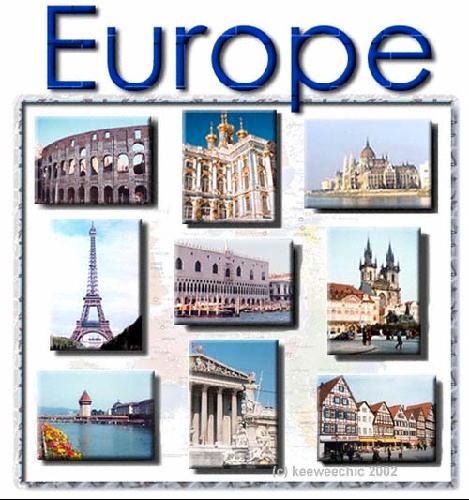
Europe is a large continent (one of the seven in the world) which borders the Arctic Ocean, Atlantic Ocean, Mediterranean Sea, and Asia among others and which contains countries such as France, Germany, England, Turkey, Greece, Poland, the Czech Republic, Bulgaria and many others. It is also the second smallest continent in the world (roughly 10,180,000 square kilometres which makes up about 2% of the surface of the world). Despite it’s small size however, Europe has the third highest population of any continent with 11% of the world’s population behind Asia and Africa. The largest country in Europe is Russia, though this spans both Europe and Asia, while the Vatican City situated in Rome is its smallest.

Europe has had a tumultuous and highly interesting history. Ancient Greece can arguably be described as the birthplace of Western culture with many very important thinkers and artists at the time residing there. Ancient Rome also played an important part in Europe’s early development as the Roman empire introduced roads and sewers to much of Western Europe and beyond.

Europe would play a larger role in global affairs following the 16th Century during ‘colonialism’ when many European nations such as England, France and Spain would control much of the world including America, much of Africa, a large part of Asia and Oceania. Europe also played a very large role in both world wars; the first a result of Kaiser Wilhelm the Second and tensions with England, the second a result of Adolf Hitler’s trying to recapture much of the land they lost during the Treaty of Versailles (and more), with their invasion into Poland being the catalyst for war. Following this Europe would be divided into two parts by an ‘Iron Curtain’ during the cold war – NATO in the West and the Warsaw Pact in the East.

More recently European integration has resulted in much of Europe finding strength in numbers. The EU is a union of currently 27 states of Europe, committed to integration and providing a standardised system of laws aimed at creating a single market to encourage the flow of goods, people, services and capital. This has resulted in the abandonment of passport controls between the borders, as well as a common currency adopted by 16 of the 27 members called ‘The Euro’.

While this integration makes Europe a convenient place to visit – allowing easy transportation between countries etc, its colourful history means that it remains a highly diverse place to visit with many cultures, traditions and climates. Visiting the Czech Republic could not be more different from visiting Spain or Southern France, and visiting the cheque republic provides an entirely different experience to visiting Bulgaria or Switzerland. As such there is a lot of tourism in Europe, and it continues to play an important role on the world stage.

Posted under Europe

This post was written by admin on December 20, 2010

Tags: , ,

EuropeWord

EuropeWord

EuropeWord

We are an informative website, providing information about Europe and most popular websites in Europe.

Posted under EuropeWord

This post was written by admin on September 8, 2008

Tags: , , ,