The European Economy: Just the Facts

European Economy

European Economy

The European economy is made up of over eight hundred and thirty million people across forty eight different ‘states’ or countries. Like any continent, the wealth of these countries will vary depending on various factors and again as is the case elsewhere, the European economy in most countries has been affected by the recent economic crisis. However the poorest states in Europe are still generally wealthier than the poorest in other states and countries in terms of GDP and living conditions.
By adopting the Euro (a single currency for many European countries) the European economy has increased and stabilised. This was a forwards-thinking idea for the European economy proposed by the UN, the success of which could present the beginnings of a move towards a truly global economy. This also makes it easier for residents going on holiday between European countries, for business and for exports and imports within the continent. Not every European economy agreed to a unified currency however; the UK being one of the most notable members of the EU that has opted to reject the Euro. This may in part be to the UK being a separate island and the ‘island mentality’ that seems to go along with this. At the same time, the British Pound is still stronger than the Euro suggesting that it may not be in the UK’s best interest to adopt the Euro. Both the pound and Euro are counted towards the European economy and both are stronger than the US dollar. There is also a divide between the Western and Eastern European countries with those in the West enjoying better living standards and a stronger GDP. This is partly due in some cases to previous communist regimes, and in others due to differences in industry and exports. Some countries such as Turkey and the Russian Federation have territories only partly in Europe but and so only partly contribute to the European economy.
Europe was the first industrial continent which has made the European economy historically one of the most successful with the UK leading the way in the 18 hundreds. This is partly the reason for the European economy (and particularly Western Europe) being so healthy today. Since World War 2 this industrialisation grew rapidly while the economies of the various European countries became closer. This was partly what eventually lead to the formation of the EU in 1999 and the related introduction of the Euro to the European economy.
It is however Germany that has the largest national economy in Europe which ranks fourth globally for GDP and fifth for purchasing power parity (PPP). This is followed by the European economy of France, the UK and Italy respectively. Taken as a single country, the European Union would be the world’s largest economy in terms of GDP. If we apply various business valuation methods to the analysis of European economy then Europe is also the world’s richest region in terms of assets under management; with the European economy having over $32 trillion dollars in investments and assets compared to North America’s $27 trillion.

Posted under Europe

This post was written by admin on May 27, 2010

Tags:

The European Union countries- at the helm of global affairs

European Union countries

European Union countries

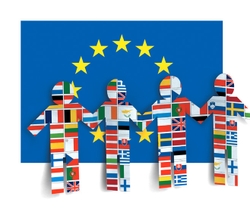
The European Union, popularly known as the E.U, is the political and economic juncture of 27 nations. Alphabetically the list includes Austria, Belgium, Bulgaria, Cyprus, Czech Republic, Denmark, Estonia, Finland, France, Germany, Greece, Hungary, Ireland, Italy, Latvia, Lithuania, Luxemburg, Malta, Netherlands, Poland, Portugal, Romania, Slovakia, Slovenia, Spain, Sweden and the United Kingdom. Romania and Bulgaria are the most recent European Union additions.

The pioneer to the E.U was based after the Second World War. This was a modest effort to unite European counties. The first nations to unite together were France, Italy, Luxemburg, Belgium, Germany, and Luxemburg. These countries are known as the founding members of the European Union. Gradually more and more European nations joined the European Union.

The European Union came into effect after the Treaty of Maassticht. The European Union aims at strengthening the democratic governing of the partaking nations. This shall improve their good organization and working. The European Union was intended to set up economic and financial alliance. This step was made to secure these countries and represent them as a union in front of the world. These countries have to follow some basic laws. The European Union countries should have democratic rule and human right protection. All the European Union counties are supposed to follow certain objectives on the subject of monitory issues.

The body that represents the people of European Union is called the European Parliament. The European Commission manages people’s interests like finance etc. The chief decision making body is the Council of the European Union. It has all the legislative powers.  All these bodies are based on democracy and equal rights.  The Commission elects a Commissioner of each member state to control the state affairs. There are other sub bodies like banks, courts and committees to help the smooth functioning of the European Union. The court of justice is the fundamental legislative body of the European Union. The court of Auditors monitors the European Union financial plan and expenditure.

The European Union is chiefly looking for growth and harmony between its member states. For this purpose the European Union arranges for several meetings, agendas and treaties from time to time.  The European Union has establishes a common market in Europe. The European Union imposed a common currency called the “Euro” in all its member nations. This has made its special place in world’s market. Europe emerged as a powerful region in front of the world.

Posted under Europe

This post was written by admin on April 15, 2009

Tags: , , ,

European markets

European markets

European markets

The European Union has brought prosperity to the European market. The E.U made special arrangements and treaties between countries that they could never go against each other. There was peace everywhere which resulted in prosperity in European markets. For example France, Italy, Belgium, Luxemburg and Germany signed a treaty in the year 1951 to club all their coal and steel markets.  In the year 1957, a very important treaty called the Treaty of Rome was signed to form The European Economic Community, commonly known as the ECC. This laid a foundation for a common market for all the European Union countries.  The ECC made many reforms in the European markets. It eliminated all the tariffs or duties on the imported goods.  This single market soon became a realism practice after the European Union Single European act in 1986. The European commission and The Council of Ministers are responsible for the major decisions taken for the European markets. These bodies update the policies on a regular basis and regulate all the market strategy. The common market also produced thousands of jobs for the natives of Europe.  It also formulated a citizen’s agenda to promote economic integration.

This single European market also provides certain freedom to the member states.  The chief liberty involves the freedom of goods. The European Union states that a nation’s main responsibility is take care of its citizens and their needs. Therefore, the proposal for removing the national barrier for the free movement of goods between E.U countries was detached. This lead to the freedom of goods: only in exceptional cases, like the vehicles, chemicals, cosmetics, footwear, textile, toys, gas appliances, pharmaceutical products and all the construction material. The European Union only regulates the higher risk product sectors.  All the lower risk segments are managed by the local bodies.  The main function of The European Union is to harmonize the trade process in European markets.  The European Commission monitors the movement of goods in both harmonized and non harmonized markets.

Other than providing a single market for goods, The E.U provides single market for services as well. This allows one member nation to provide services to another member nation, where it is not even customary.  These services include financial services, broadcasting, telecommunication and other services.  The single market depends on services, goods, capital and people. And the European Union Commission makes sure that there is a healthy business environment so that The European markets can compete at their best with the global markets.

Posted under Europe

This post was written by admin on April 6, 2009

Tags: , ,

Europe imports – The heart of Europes economy

Europe Imports

Europe Imports

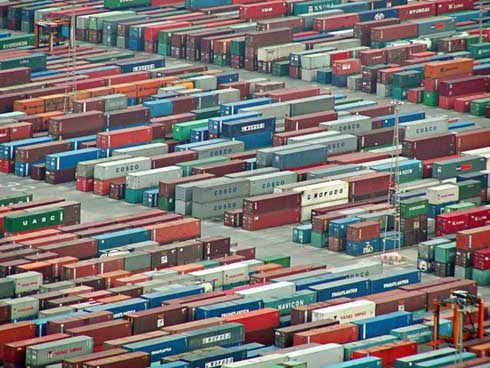
With growing tourism and an aggravated demand from the local population, especially after the formation of the EU, Europe imports have seen a surge in demand. There are many products, mostly from food and agricultural industries, which are in demand by European nations.

France, Netherlands, Italy, Spain, Turkey, the UK and Germany, along with other important states of Europe, have been in constant demand of finished and raw products from all corners of the world. These countries seek Oil and energy from the US and the Middle-East, while they rely on South-East Asian countries for timber, wood and agri-based supplies. China is a huge supplier of finished electronics products, with most of these coming from the state of Taiwan and the Indian IT industry is also turning its heads towards Europe for sustained growth.

Almost all major developing countries like Brazil (which exports coffee to many parts of Europe), China and India have started aiming for a better share in the Europe imports pie. This trend has especially picked up since the current global crisis, after which companies dealing with clients in the US and Japan, have started moving towards Europe for sustained growth and better rates on investment.

Turkey has been seeking hosiery items and raw materials from India and China. Europe imports consist of agri-products and fisheries; from cotton and shrimps to wood supplies, the better part of Europe imports revolve around these items. Companies in Europe seeking such raw materials are heading towards India and China, primarily because of the low cost of raw materials being offered by private and governmental companies in these countries.

Exporting products to Europe is not that easy and since most of these are processed foods or food based items, these exports have to clear strict quality checks before being allowed into Europe. Recently some chocolate bars and products such as GM soy food were banned in Europe, owing to strict regulations put in place by the authorities there. So before you plan to export your product to Europe, make sure that it complies with their quality standards, else you might have a reversal of orders, and may even face fines from the regulatory authorities.

Posted under Europe

This post was written by admin on December 21, 2008

Tags: , ,

Euro results for European economy

Euro money

Euro money

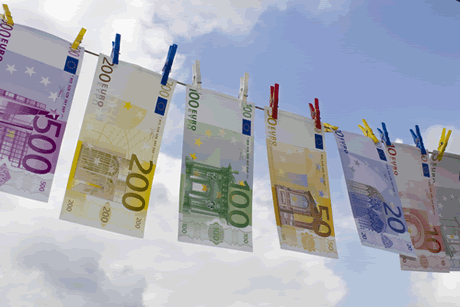
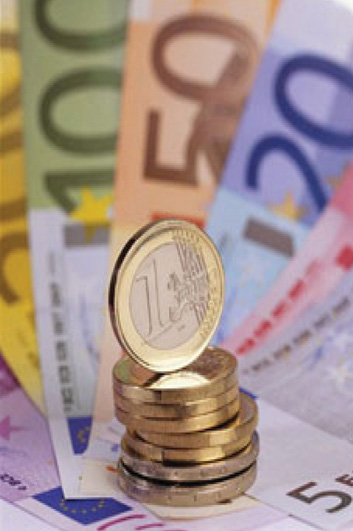
The Euro was established and came into practice with the sole aim of giving the Dollar a tough time as the universal currency. But, as speculated, it hasn’t helped the European economy much; rather, according to surreys and news reports, growth rate of many European nations was just a meager 1.4% in the last fiscal year. In fact, many countries in the European Union are facing recession under inflationary pressures as well as pressures of rising food and oil prices worldwide.

Spain, Germany and Britain are well on their course to recession, which happens when the growth falls for two consecutive years, this might happen to other large economies of the European Union as well, considering the catastrophic effect that mortgage and sub-prime crisis has had on the developed economies of the European Union.

Speaking of Germany, both the customers and the sellers have kept a tight control over their purses- a situation known as “purse string tightening”.  On the bigger prospective, Germany still has a robust economy, good employment rate and strong exports, even with a small growth rate of 1.8%. Netherlands and Poland, though much smaller than Germany and Britain in terms of economy, have been able to stand the test of these financial blows rather well and are growing at rates far better than the average Euro zone averages.

Inflation has much to do with the rising financial crisis, which is attributed to rising oil and food prices. Jaun Claude Trichet, President of the European Central Bank further warns that inflation is not going to cool down in the near future. He remarks that inflation may come down slightly in 2009, allowing the economy to stabilize a bit, but the markets and investors, and therefore the whole economy will be watchful and volatile for a longer than expected period.

The only option seen by most economists under the present prospective is to cut the interest rates to give the economy a boost, but Mr. Trichet dismissed this proposal because this would lead to a further aggravation of inflation according to him, and the Union Bank’s main aim is to control and stabilize prices rather than push the growth as of right now.

Posted under Europe

This post was written by admin on September 14, 2008

Tags: , , , , , ,