Why Russia’s 2014 Olympics Could Suck

Why Russia’s 2014 Olympics Could Suck

By most standards, the 2013 Olympics in England were a hit. The opening ceremony by Danny Boyle was a hit, London’s transport managed to hold up in the face of inflated tourism and nothing went drastically wrong (perhaps the biggest surprise was that England also managed to win some medals of their own). Like all good things though, the celebrations had to come to an end and Boris Johnson (London’s mayor) had to hand the baton over to Rio (quite literally) for 2016. Can Rio live up to the standard set by the UK?

Well that’s a question for another day, before that we have the Winter Olympics of 2014 to look forward to taking place in Sochi, Russia. So how is that one likely to fair?

Well, on the one hand Russia might seem like a good place for Winter Olympics – much of it being rather frosty (images of Rocky 4 come to mind), but at the same time Russia isn’t without its problems (see ‘Pussy Riot’…) and the whole process so far hasn’t exactly gone smoothly. In fact it seems that scandals are hitting the 2014 Winter Olympics one after another. Could it be that this is going to blow up in everyone’s faces?

Akhmed Bilalov

In terms of recent bad news for the Olympics in Russia, the name ‘Akhmed Bilalov’ may well come to mind. Akhmed, former head of the Russan Olympic Committee, was publicly scolded by Putin himself for going well over budget and for a two-year delay constructing the Sochi ski jump. In February this year he was fired for his crimes, but this being Russia and this being Putin, it didn’t end there…

On April 27th, Bilalov claimed to have been exposed to mercury in an attempted poisoning at his Moscow office. After leaving Russia for treatment in Germany, he told the Interfax News Agency that elevated levels of mercury were found in his body, but that he did not ‘wish to accuse anyone’ at this point. Nevertheless, he intends on taking the matter to the police. While many have accused Bilalov of fabricating the tale though, online news site ‘Gazeta.ru’ claim they have seen a copy of his medical reports and that they do indeed show elevated mercury in the blood.

But that’s not the whole story either. In April, North Caucasus Resorts opened a criminal case against Bilalov over the Russian Olympics for embezzling $2.6 million from the company during the construction of the ski jump – that might explain why it took him so long…

As well as allegedly embezzling all that money, Bilalov is also reportedly guilty of misspending a huge $97,000 during his time as chief – which is rather a lot. Actually though, Bilalov is not the only guy responsible for massive misspending when it comes to the Olympics. Aleksei Nevsky for instance is another official under investigation regarding the Russian Olympics and has been accused once again of mismanagement and embezzlement. In fact, Russia’s Audit Chamber estimates that over $500 million has been misspent by various state-run companies responsible for organising the Russian Olympics.

All this has resulted in the Sochi games being on course to become the most expensive Olympics ever staged. The budget has swollen to five times what was estimated, generating a cost of $50 billion. Putin had recruited a number of wealthy private investors such as Oleg Deripaska, and many of them are becoming frustrated with the proceedings – demanding that the government contribute more of their own money. With so much of that misspent, and with so much bad press already surrounding the process, this has potential to go very wrong.

More Concerns

There are more concerns too. For instance, reports are coming in of ruthless damage to the environment around Sochi. In fact, The World Wildlife Fund’s Russian branch has withdrawn support of the games due to said environmental damage. The group warned that Olympic construction was ‘out of control’ and that Russian authorities have been ignoring the recommendations of ecologists.

On top of all this, allegations have also come from the Human Rights Watch regarding the mistreatment of workers. Migrant workers working at the Russian Olympics’ building sites have been repeatedly cheated out of their wages, and denied food and housing despite working long hours.

Much of this likely comes down to Putin’s desire to be seen as a strong and powerful leader of a formidable and capable nation. A leader known for his macho posturing is no doubt piling on the pressure for this to be nothing short of a grand spectacle, but if the government continues pushing so hard and alienating so many groups, it could be that the Winter Olympics – which should be kicking off in less than a year now – will ultimately collapse under the weight of their own ambition.

Posted under Europe, Sport

This post was written by admin on June 4, 2013
Top European Bodybuilding Legends

Top European Bodybuilding Legends

Bodybuilding is an unusual sport in many ways, particularly in the fact that you don’t run, throw anything or run or jump around in any capacity while you’re actually competing. Rather all of the work in bodybuilding takes place beforehand meaning that the result is really a foregone conclusion before anyone has even stepped onto the stage. Bodybuilding is almost more a way of life than a sport which requires intense discipline, a huge work ethic and a helping of good genetics.

A specific set of skills perhaps requires a specific set of people then and perhaps this is why there are so many great bodybuilders from Europe – perhaps it just appeals to the European mindset, or perhaps European physiques are conducive to bodybuilding?

Either way, some of the greatest bodybuilders of all time have come from Europe, particularly during the golden age of bodybuilding. Here then we will look at some of those…

Arnold Schwarzenegger

Arnold Schwarzenegger is the name that comes to mind when you think of bodybuilding and it just so happens that he’s from Austria in Europe. To be specific he comes from a small village in Austria called Thal where you can today find a museum where his home used to be. He always had aspirations to travel to America though and was able to use his massive guns as a one way ticket to get out their via bodybuilding legend Joe Weider.

Franco Columbu

Franco was Arnold Schwarzenegger’s best friend and a fellow immigrant during bodybuilding’s golden age. Specifically Franco came from the small village of Ollolai in Sardinia (Italy) which you can see in the now-famous documentary ‘Pumping Iron’ (where he pulls his Dad’s car into a parking space saving him a parallel parking manoeuvre). Franco was much shorter than Arnie, but made up for it with sheer brawn – he was also a contender in strong man competitions!

Eugen Sandow

If there’s a name that’s more important to bodybuilding than Arnie’s then it has to be that of Eugen Sandow, who is often hailed as the ‘Father’ of modern of modern bodybuilding. Born in what is now Kaliningrad, Russia to a German father and Russian mother, it was in London that he began his career as a strongman (after stage jumping a performance) and eventually refined his craft into what we know today a bodybuilding.

Charles Atlas

Charles Atlas is perhaps most famous for his comic-book advertisements selling training books and for his ‘dynamic tension’ system of training. He is also a great bodybuilder in his own right though and was originally born as ‘Angelo Siciliano’ of Italy.

Reg Park

Reg Park is another bodybuilder from a bygone era who came from Europe and specifically Leeds in the UK. Perhaps Reg’s greatest claim to fame is the fact that he inspired one Arnold Schwarzenegger to get into the sport – but even before that he was a great competitor in his own right.

While there were many European bodybuilders steeling the limelight back in the golden age of bodybuilding and before, it seems that today the sport is more dominated by American athletes who seem to be more focused on size at the expense of definition. To train like the golden age bodybuilders of yore, check out the Joe Weider training principles they would have all been using.

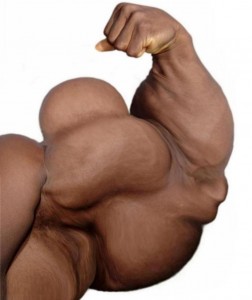
European Bodybuilding - Huge Arms

European Bodybuilding – Huge Arms

Posted under Europe, Sport

This post was written by admin on April 8, 2013

Europe’s Best Skiing

Europe's Best Skiing

Europe’s Best Skiing

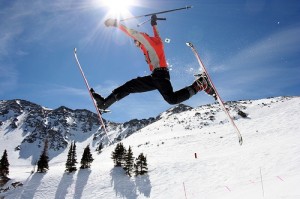
If you’re planning a skiing or snowboarding adventure in Europe then it would be entirely excusable to be confused by the vast number of ski resorts that the continent has to offer. With literally thousands of pistes in numerous countries the choice is somewhat generous so here’s a quick rundown of some of the best that Europe has to offer.

Sella Ronda, Italy

With stunning scenery the Sella Ronda is a circuit of 14 miles of runs which encircles the Sella mountain range in The Dolomites and can easily be completed inside a day (though make sure that you’re not stranded when the lifts close at the end of the day). There are two possible routes for this resort which is popular with British skiers – clockwise or anti-clockwise – which are clearly demarcated using a colour coding system; the clockwise circuit is the more fulfilling with a greater assortment of pistes and less poling is required.

Parsenn, Switzerland

A traditional skiing mountain which is easily accessed by funicular railway to the Weissfluhjoch ridge 2662 metres above sea level, Parsenn offers 35 ski runs of varying levels of challenge. The longest run is the eight mile descent to Kublis while another route ends at Klosters, home of royal skiing parties. From November to March the floodlit slopes on Fridays allows skiers to enjoy night time skiing.

Sarenne, France

The longest black run in the Alps, skiers at Sarenne can enjoy 90 minutes of continuous skiing as they descend over 2000 metres over 10 miles. The peaks of the Parc National des Ecrins can be admired from the starting point at Pic Blanc although the sheer steepness of the start is perhaps not entirely suitable for less experienced skiers who can bypass the launch for a more calming experience further down the slopes. Better be safe and book European travel insurance before setting off!

Chamonix, France

Numerous ski runs are accessible from over 3000 metres above sea level with some runs covering two-thirds of that distance, making Chamonix the spiritual homeland for skiers. The steepest descent is at Aiguille du Midi while the Domaine de Balme offers gentler slopes so Chamonix has runs suitable for all ages and levels of experience. Regular bus and trains link the different areas in the resort which also boasts a host of high class restaurants and bars.

Arlberg, Austria

With a selection of medium red and easy blue descents the pistes of the Lech-Oberlech-Zuers ski resort are ideal for families. Oberlech is car-free so access from Lech is via the cable car which runs every few minutes. For children and beginners the resort is ideal as there are many blue slopes which descend into the valley although more competent skiers may be disappointed by an overall lack of challenge.

Whatever your experience and ability, skiers in Europe have an astonishing variety of choice among the many resorts that the continent has to offer. With many of these being only a couple of hours away from the UK by plane, ease of travelling makes Europe a perfect destination to experience the thrills of winter sports.

Posted under Europe, Sport

This post was written by admin on February 8, 2013

European Cars vs Japanese Cars

European Cars vs. Japanese Cars

European Cars vs. Japanese Cars

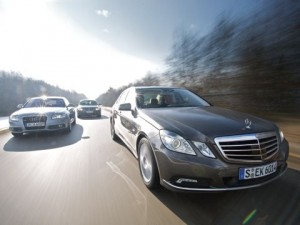
Europe is known to export many things, but perhaps one of the most exciting exports to come from the continent is the car. There are many great automobile manufacturers hailing from Europe, particularly German, British, French and Italian which include (to name but a few…): Aston Martin, Bentley, Volkswagen, Audi, BMW, Mercedes Benz, Porsche, Renault, PSA Peugeot Citroen, Fiat and more.

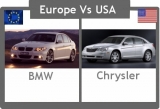
When you look at European cars vs. American cars the differences are well known. American cars generally automatic while most European cars are manual. Most American cars meanwhile are bigger and taller and often sport a square look, while European cars tend to be smaller and more rounded in appearance. Meanwhile European cars generally are thought to handle better around corners, which could be down to the existence of roundabouts in Europe and the generally smaller and more winding roads in some countries there. Another difference comes down to fuel prices, which ensure that most Europeans drive cars with smaller and more efficient engines. The height in many ways comes down to softer suspension in American cars, which could be due to their use for longer journeys cruising highways rather than smaller roads. Some fans of European cars will say that they have a better build quality than US cars which is why many Americans buy Euro – but of course American cars have their fans too who will argue against that claim.

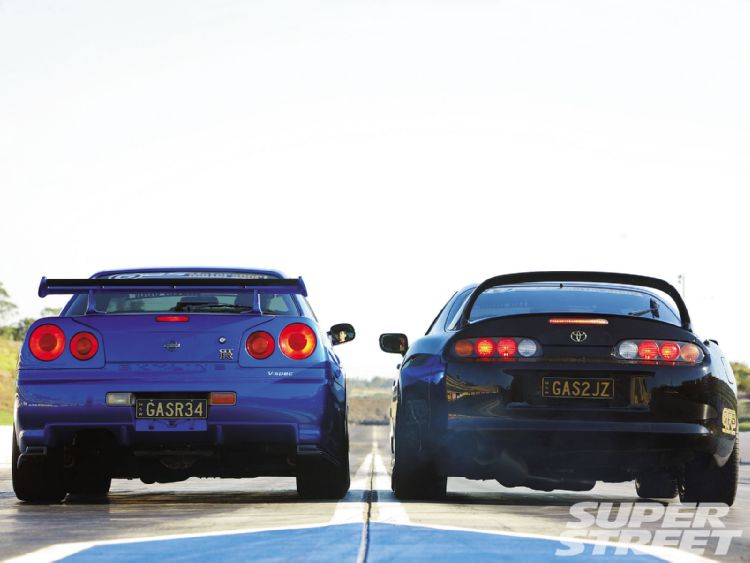
So that’s European cars vs. American cars, but where to Japanese cars fit into all this? Well you could say that Japanese cars are more European than European cars. Japanese cars, including Honda, Toyota, Suzuki and Mitsubishi among others; are well known for reliability and in a recent study by Warranty Direct Japanese cars took the top 10 places for reliability. They are also known for being fuel efficient and generally good value and again the differences between European cars vs. Japanese cars can be boiled down in many cases to the differences in Geography and lifestyle. Japan are known for investing in their technology and for producing high quality electronics. Couple this with their style of business and their dense population and packed cities – and even their smaller frames, and it makes sense that they would produce compact and efficient cars.

It’s an over-simplification sure, and it will probably prove to be controversial – but if you want more power and size then go West, and if you want more reliability and efficiency then go East…

Japanese Cars vs European Cars

Japanese Cars vs European Cars

Posted under Europe, Sport

This post was written by admin on October 4, 2012

Tags: ,

London Olympics 2012 – Success or Failure?

London Olympics 2012 – Success or Failure?

Many people said that it was too soon for England to host the Olympics again after the 1948 ‘Austerity’ games. Then, the very day after the UK won the bid yet again, the capital was hit by terror attacks. In the following years the capital would face controversial changes in government, an economy crisis and riots that would destroy many of the high streets. In the build-up to the games, the infamous Boris Johnson (mayor of London) even reportedly stated that he wasn’t sure that London transport would be able to handle the games if they came to the city. In other words then, the London 2012 could very well have been a disaster, so the question we’re examining here then is… has it been?
The Olympics So Far
Well it would seem so far that the overriding answer to that question is a resounding ‘no’, and that by-and-large the Olympics has been a success this year. The opening ceremony of course is where most eyes were fixed, and where London would immediately be compared to Beijing. Comparatively this was a low-key affair costing significantly less and going a lot lighter on the fireworks, but still it managed to be powerful and moving thanks to music from Underworld and Mike Oldfield. While some parts were a little too ‘British’ and director Danny Boyle lost some of the audience not familiar with English TV, the portrayal of the industrial revolution, the birds of peace, the appearance of Bond and of course Mr Bean on the keyboards all had every talking. And the lighting of the torch was also highly unique and ambitious and came off splendidly.
Since then the games have continued mostly flawlessly. There was a hiccup or two of course – with some controversy surrounding the women’s badminton and a suspiciously fast swimming lap – but overall nothing has touch wood gone massively wrong.
Infrastructure
Meanwhile London seems to be chugging along nicely. Despite the fears of the city coming to a standstill as Boris Johnson allegedly predicted, it would actually seem that some of the time the underground is even quieter than it would normally have been with many commuters sensibly opting to avoid the busiest areas or to change their working hours. And the Olympic Park is seemingly a feat of engineering itself also (even if the red tower next to it is a little bizarre…).
However Boris’ London transport fears perhaps weren’t entirely unfounded, as he did find himself hanging around for a while rather awkwardly in Victoria Park after his zip wire stunt went wrong and he was left dangling from the wire in front of a crowd of spectators for around five minutes. Perhaps the most British part of the whole Olympics…

London Olympics 2012 – Failure with North Korea Flag

Posted under Europe, Sport

This post was written by admin on August 9, 2012

Tags:

Euro Basket 2011

Euro Basket 2011

Euro Basket 2011

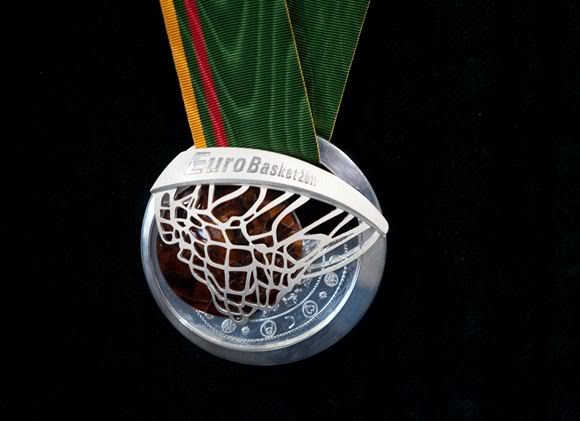
Europe Blog would like to congratulate Spain for winning Euro Basket 2011. Good job guys !

France and Macedonia, better luck next time. Also, let us not forget Lithuania. Lithuanians were wonderful host and favorites of many. Thank you for the tournament.

Posted under Europe, Sport

This post was written by admin on September 26, 2011

Tags: , ,