Europe climate – mildly spectacular

Europe Climate

Europe Climate

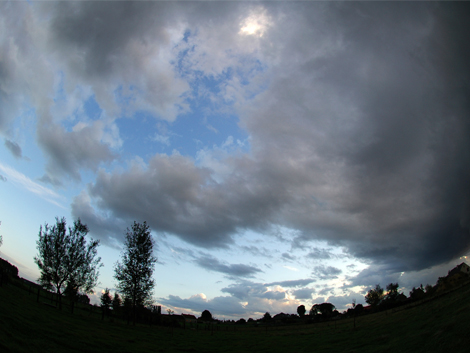
Although Europe has different types of climatic conditions, depending upon the geographic conditions of the place, yet, on a general level, most of the Europe climate remains temperate and mild, with cool summers and cold winters. Generally, if we compare different places on the same latitude with places on the same latitude in Europe, we would notice that places in Europe have a more favorable climate than places elsewhere in America, Asia or Africa. If we compare the average January temperatures of Berlin, Calgary and Irkutusk- lying in the Asian region of Russia, we would notice that the temperature in Berlin is about 8 and 22 degrees Celsius higher than temperatures in Calgary and Irkutusk respectively.
So what is the main reason behind such a favorable and mild Europe climate? The answer is- winds from the Atlantic Ocean. Warm winds sweep the whole continent and keep the continent mildly warm. Ocean currents carrying warm waters from the Gulf of México have a major role in this natural phenomenon. Since there is not mountain barrier in Europe, which is large enough to stop these winds from sweeping across the continent, and since most of the continent is within the range of 300 miles from the Atlantic Ocean, these currents affect the climatic conditions of the whole continent. Therefore, Europe climate is quite the same throughout the continent.
Norway is witness to the most dramatic effects of the North Westerly winds and the ocean currents. Since most of the parts in Norway lie in the Arctic region, they should ethically have been covered in snow, but the warm currents and the winds have had such an effect that most of Norway’s coastline remains snow-free throughout.
Northern Europe climate, naturally, has longer and cooler winters and compared to the southern part of the continent. Winters are colder and longer in the East as compared to the west. Summers are shorter, but hotter in the East as we move towards the west.
As far as rainfall is concerned, most parts of Europe receive and annual rainfall of 20-60 inches, with the maximum of it happening towards the West of the mountains (around 80 inches in general). The areas receiving lighter rainfall include the Southern part of Spain, Kazakhstan and northern part of Scandinavia.

Posted under Europe

This post was written by admin on November 29, 2008

Tags:

Facts about Europe

Facts About Europe

Facts About Europe

1. Europe stands as the second smallest continent in the world, by area. Yet, it has a cultural diversity which can hardly be found in any part of the world. Besides, it also controls a large amount of the world’s political and financial decisions. It is also the 3rd most populous continent in the world
2. Europe is also home to the world’s smallest country- the Vatican and also the world’s largest- Russia- one of the most astounding facts about Europe
3. Another point in this list of facts about Europe is that in the 17th and the 18th century, Europe had controlled most of the world. The saying that ‘Sun never sets in the British rule’ was a correct epitome.
4. The borders of Europe are not very clear, even till today. They just refer to socio cultural boundaries.
5. The Greek civilization, which is said to be the forerunner of the modern western culture, had its home in Europe only. Famous scientists and thinkers such as Archimedes, Pythagoras and Euclid were a part of this very civilization.
6. One of the most unknown facts about Europe remains that there was a period in the history of Europe, known as the ‘age of migrations’, which led to the diversity in the present European culture that we see today. This period was seen after the fall of the Roman Empire and there was a large scale movement of the German, Roman, Saxon and Celtic tribes to various parts of Europe. This has led to a conglomeration of the cultures of Europe, as we see it today.
7. Renaissance was another period in the history of Europe which has led to the uprising of the new humanism and knowledge- definitely one of the most renowned facts about Europe.
8. The First World War is supposed to have started in Europe, with the assassination of the archduke of Austria and involved almost the whole of Europe in it. This war had left more than 40 million people dead.
9. Although most of Europe’s forests have been lost during the ages of deforestation, yet almost one quarter is still forest area in Europe, with the Taiga forests dominating the vegetation. Some rainforests in parts of the Caucasus and Oak forests in the Mediterranean regions still remain untouched- an unbelievable fact, considering the rapid deforestation that Europe has seen over the years.
10. The formation of the EU has been the only one of its kind in the world. This body of integrated economics among member countries has led to rapid development of free economy in Europe and is projected to be one of the most decisive organizations in the coming years.

Posted under Europe

This post was written by admin on November 22, 2008

Tags: ,

Mercedes Benz- the European pride

German cars

German cars

Mercedes Benz, owned by the Daimler AG (previously known as Daimler-Benz), is one of the most common names for luxury car manufacturing in the world. Mercedes is a name that has become synonymous with safety and technologically advanced vehicles, while keeping the luxury standards at the peak. Mercedes Benz came into existence soon after Karl Benz had made the first automobile in the year 1886. The first Daimler vehicle was engineered by Wilhelm Maybach in 1901. Soon after their initial success stories were written, Karl Benz and Gottlieb Daimler came together to form the company that we better know as Mercedes-Benz today. This company has been the frontrunner and has proved to be the prime example of German engineering for ages now. Mercedes and BMW are two of the most revered European car brands in the world, and are known for performance and luxury.
Today, Mercedes-Benz has a whole range of accolades to its name, especially in the quality section. It is known as the third most ‘quality conscious’ car brand of the world. Mercedes Benz has also been known as a brand that has a complete range of passenger cars, carriages and buses. Mercedes has also been constantly working on the concept of small city cars and has effectively been rolling out highly fuel efficient city car models since the year 1994. These fuel efficient cars have been a boon to the European market, Mercedes’ home ground, as the fuel costs here are almost double the fuel costs in the USA.
Although, there have been many famous Mercedes models in the past, the Mclaren SLR stands apart when it comes to the brand image of Mercedes Benz. The SLR is one of the most famous super cars in the world today. Built on the 5.5l V8 engine and a carbon fiber/fiber monocoque frame, the car can reach top speeds of 330 km/hr and comes with a hefty price tag of $500,000 approximately.
Apart from the passenger car range, Mercedes Benz is also a renowned name in the bus/van and the truck manufacturing section. Known for precise German engineering and the capability the weather all storms, buses and trucks from Mercedes are a revered lot all around the world. The Vario segment of Mercedes Vans is one of the most famous and used in the world. Because of their load-picking capacity and immense comfort, Vario vans have become a favorite with many transport corporation owners.
Sticking to their commitment to evolve and produce new technologies, Mercedes Benz has been working hard to produce great hybrid cars, with the F700 being the latest addition to its fleet of great hybrid cars.
Mercedes has meant a lot for the European car market, and therefore, should be regarded as one of the frontline European car brands that have existed for decades, now.

Posted under Europe

This post was written by admin on November 18, 2008

Tags: , ,

Europe – From chocolates to cigarettes

Europe Drinking Age

Europe Drinking Age

Legal drinking age in Europe varies greatly with the country. The most varied ages spectrum is seen in the UK, where drinking is legal, even for a kid of 5 years, provided some rules are abided. Any one who is above 18 years of age can purchase alcohol in the UK, and people above 16 years of age can purchase alcohol chocolates. Kids whose ages are 16-18 with special licenses, can consume wines and spirits at a pub with their main course meals, provided the yare accompanied by an adult and the liquor is ordered by the adult. Children from 14-16 years of age can consume beer under adult supervision. Children below 14 years of age are not allowed into pubs, until of course, they are accompanied by their parents. For a kid above 5 years of age, drinking is legal in one’s home, provided it is supervised by parents.
For France as well, anyone under the age of 16 can consume alcohol within the boundaries of their homes under adult supervision. For purchase of beer and wine, you need to be at least 16 years old, and for purchasing harder liquor with more alcohol content, one should be more than 18 years of age. In Italy also, as well as in other parts of the continent, rules are almost similar. Anyone between 14-18 years of age can consume liquor in their homes and can purchase alcohol after having reached the age of 18.
Again, much like the legal drinking age, legal age for smoking and consuming cigarettes and tobacco products varies from country to country. In Europe, the legal age of purchase of cigarettes is 18 years in almost all the countries, with an exception to Netherlands, where this criterion is relaxed to 16 years of age. Similarly the legal age for smoking is also 18 years except in the UK and Ireland, where smoking is allowed after the age of 16. Netherlands and Isles of Man impose no such restrictions pertaining to smoking ages. Similarly, the legal ages for consent to sex are disparate, depending upon the country. In the Vatican, it is the lowest, set at 12 years of age, where as in places like Malta and turkey, it is as high as 18 years of age, which happens to be the highest in Europe. On an average, this age mostly revolves around 14-16 years of age.

Posted under Europe

This post was written by admin on November 11, 2008

Tags: , ,

Europe train travel- Simply exquisite!

Europe Train

Europe Train

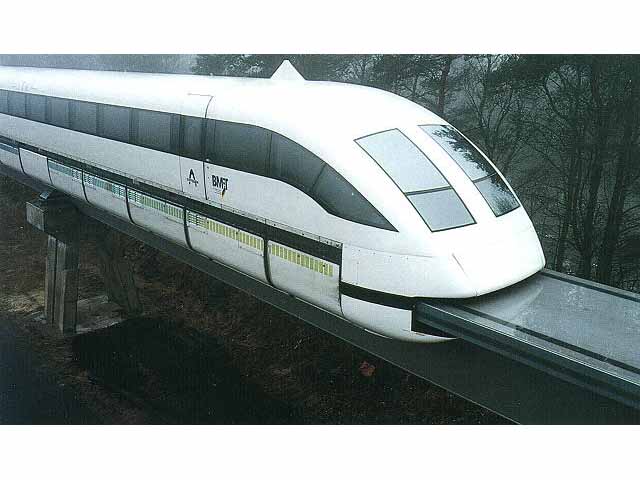
Europe train travel can be an exciting adventure, especially for those who want to enjoy the country-side. The most dramatic thing about in Europe is that there is a whole range of trains in Europe to choose from. From the TGV, which is one of the fastest trains in the world to those using standard and narrow rail gauges, you can get a taste of modernity, encapsulated in medieval serenity while traveling through trains in Europe. Trains in Europe are mostly electrified and use both AC and DC sources for deriving energy.

To ease rail travel between various European countries, the Euro-rail system was implemented, which later came to be known as the Eurail. The Eurail group is Netherlands based and operates mostly from Luxembourg. It is basically a conglomeration of various European rail and shipping companies and provides passes to the residents of carious countries for rail travel in Europe. The Eurail passes and the Inter-rail passes give the traveler an almost unlimited scope of traveling in Europe at a fixed fee per day, which is generally very nominal. Passes have various rules and laws associated with them. For example, there are passes that would provide unlimited travel per day for a particular charge, and there are others that would limit the travel to a certain number of days. Eurail passes provide you for free travel on all ordinary trains that are in association with the organization. There are some special trains which might be needing reservation before you could travel on them. The Eurostar, the TGV, Thalys and some night trains having sleeping compartments would require a small reservation fee before you could travel by them. Trains like EuroCity trains do not require any additional charges if you have the Eurail pass. Only non-residents of Europe can avail Eurail passes.

Train directions should be taken care of while traveling. It might be possible that the train you took for going in a particular direction might not be the same way back. Make sure that you have the time table with you and that you have counter-checked the train direction with fellow passengers. There are some historic rail routes such as trans-Manchurian and Trans-Mongolian, which can be checked out if you have enough time on your hands.

Posted under Europe, Travel

This post was written by admin on November 5, 2008

Tags: , , , ,